Welcome to our website!


What Is Cathodic Disbondment and Why Does It Matter for Pipeline Coatings?
What Is Cathodic Disbondment and Why Does It Matter for Pipeline Coatings?
Buried steel pipelines often use external coatings together with cathodic protection to control corrosion. The coating limits contact between the steel and its surrounding environment, while cathodic protection helps protect exposed areas.
These two measures must work together throughout service. One property that engineers assess when selecting a pipeline coating is its resistance to cathodic disbondment.
Understanding this test helps buyers evaluate coating systems, compare technical submissions and identify the evidence needed for project approval.
What Is Cathodic Disbondment?
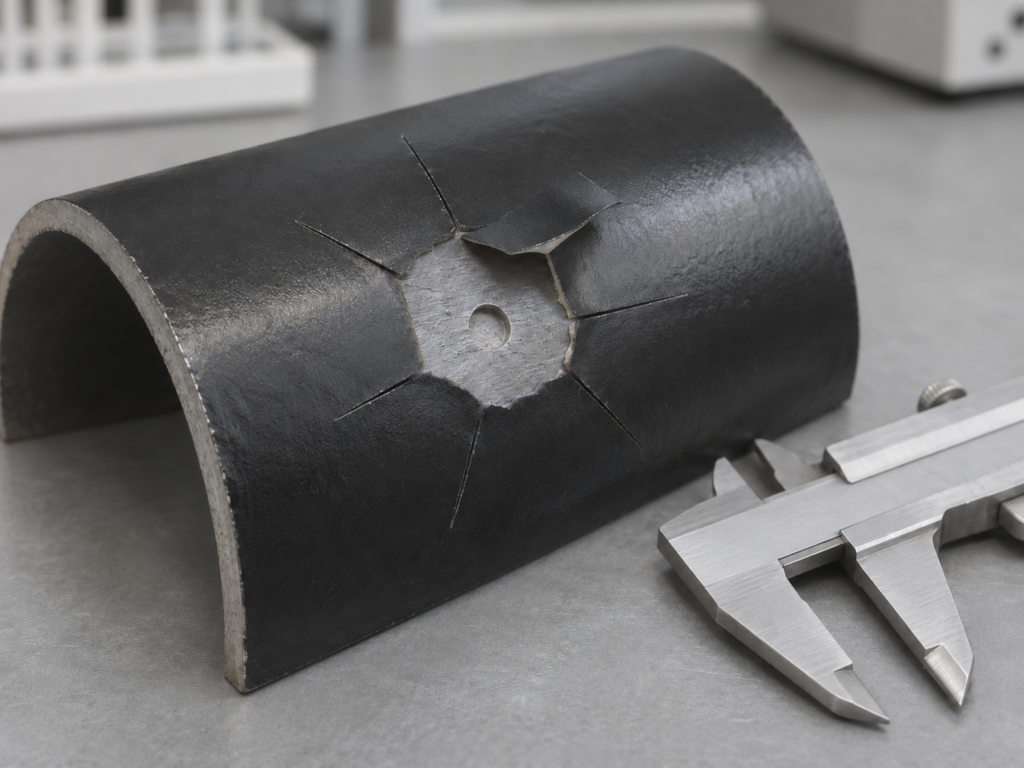
Cathodic disbondment is the loss of adhesion between a coating and its substrate caused by the products of a cathodic reaction.
A coating defect, often called a holiday, can expose the steel to moisture and dissolved salts. Under cathodic protection, electrochemical reactions occur at the exposed surface. The resulting conditions can affect adhesion around the defect, allowing separation to extend beneath the coating.
AMPP defines cathodic disbondment in terms of this reaction-driven loss of adhesion. Its assessment therefore involves the coating, the substrate and the conditions at their interface. AMPP corrosion terminology
How Is Cathodic Disbondment Tested?
Laboratory testing evaluates how a coated steel specimen responds under controlled electrochemical exposure.
Depending on the specified method, a specimen is immersed in an electrolyte or fitted with a local test cell. An electrical potential is applied, and the specimen remains under the prescribed conditions for a defined period. The coating is then examined to determine the extent of disbondment.
ASTM G8 covers cathodic disbonding tests on coated steel at ambient temperature. ASTM G42 addresses pipeline coating exposure at elevated temperatures. The selected method and edition should follow the project specification. ASTM G8 · ASTM G42
What Should Buyers Check in a Test Report?
A reported disbondment value needs its test conditions to be meaningful. Buyers should review the following information alongside the result.
Report detail What to verify
Coating identification Product names, grades and the complete combination of layers
Specimen preparation Steel preparation, primer application and coating installation
Coating thickness Thickness of the individual layers and the completed system
Test method Standard, edition and applicable procedure
Exposure conditions Temperature, duration, applied potential and reference electrode
Defect and assessment Initial holiday dimensions and the method used to measure disbondment
Acceptance requirement The limit specified for the applicable coating type and project
These details provide the basis for a technical comparison. Where conditions differ, the purchaser and testing laboratory should review whether the reports support the intended qualification.
How Does ISO 21809-3 Relate to This Test?
ISO 21809-3 addresses the qualification, application and testing of external field joint coatings for buried or submerged steel pipelines.
For a field joint coating submission, the relevant coating type and qualification requirements determine which tests and acceptance criteria apply. Buyers should identify the applicable provisions before commissioning testing or reviewing a supplier’s report. ISO 21809-3 scope
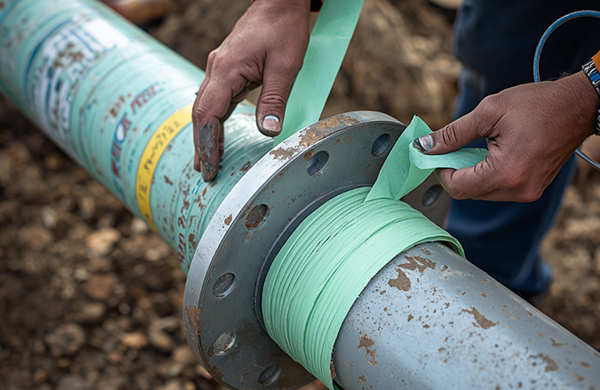
For tape-based systems, the technical submission should clearly identify the primer, corrosion-protection layer and mechanical outer wrap used in the tested configuration. This allows the reviewer to match the proposed supply with the qualification evidence.
How Should Results Guide Coating Selection?
Cathodic disbondment resistance forms part of a broader coating assessment. Engineers also consider adhesion, impact resistance, indentation, application conditions and compatibility with adjacent coatings.
Laboratory exposure provides comparative evidence under defined conditions. ASTM G42 notes that different coating systems can respond differently, and the same measured disbondment can have different implications for their protective performance. Results should therefore be assessed alongside the coating design and intended operating conditions. ASTM G42 significance and use
For procurement, this means starting with the project requirements, identifying the proposed coating configuration and then checking the supporting evidence.
Frequently Asked Questions
Is cathodic disbondment the same as peel adhesion?
The tests evaluate different responses. Peel adhesion measures the force required to separate a coating or tape under specified conditions. Cathodic disbondment testing examines adhesion loss following electrochemical exposure.
What does a reported result of 0 mm mean?
The result should be read using the report’s measurement definition. Where the method measures extension beyond the original holiday, 0 mm indicates that no measurable extension was recorded under the stated conditions.
Does one test report cover every thickness and layer combination?
Review the qualified range stated in the report and supporting documentation. Changes to the primer, layer thickness, outer wrap or installation procedure should be assessed against that range before project approval.
Discuss Your Pipeline Coating Requirements with Jiayu
Jiayu supplies cold-applied polyethylene tapes, viscoelastic materials and heat-shrinkable coating products for pipeline corrosion protection.
To support a technical review, please share your project specification, operating temperature, pipe dimensions, existing coating and required test methods. Our team can review the proposed materials and available supporting documentation with you.