Welcome to our website!


Inner Wrap Tape, Outer Wrap Tape and Primer: How a Complete Cold-Applied Pipeline Coating System Works
A cold-applied pipeline coating system is more than a single roll of tape. For reliable external corrosion protection, the primer, inner wrap tape and outer wrap tape must work together as a compatible system.
Each component performs a different function:
The primer prepares the steel surface and improves adhesion.
The inner wrap tape provides the primary corrosion protection layer.
The outer wrap tape protects the inner layer against mechanical damage.
Understanding these roles is important for pipeline owners, EPC contractors, maintenance companies and procurement teams. Selecting products only by tape thickness or price may result in an incomplete or incompatible system.
This guide explains how the three components work together, what buyers should check and why system compatibility matters.
What Is a Cold-Applied Pipeline Coating System?
A cold-applied pipeline coating system is installed at ambient or specified application temperatures without using the intensive heating normally required for heat-shrink products.
A conventional polyethylene tape coating system generally consists of three layers:
System component Primary function
Primer Promotes adhesion and prepares the steel-to-tape interface
Inner wrap tape Provides the main corrosion protection barrier
Outer wrap tape Provides mechanical protection and reinforces the system
Depending on the project specification, cold-applied tape systems may be used on:
Buried steel pipelines
Straight pipe sections
Pipeline bends and elbows
Welded joints
Fittings and transition areas
Local coating repairs
Rehabilitation of existing pipelines
The appropriate system configuration depends on pipe diameter, operating temperature, surface condition, soil environment, mechanical loads and the applicable project standard.
The Function of Pipeline Primer
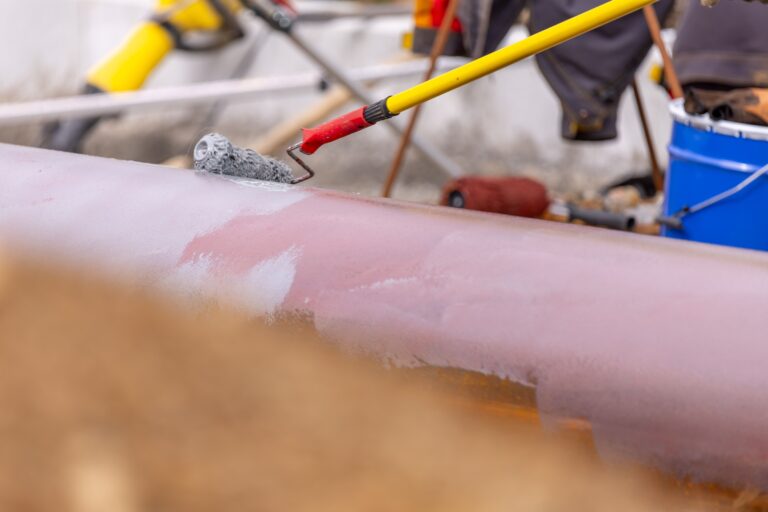
The primer is applied directly to the prepared steel surface before wrapping the inner tape.
Its main functions are to:
Improve adhesion between the steel and the inner wrap tape
Wet the prepared steel surface
Bind small amounts of residual surface dust
Help create continuous contact at the steel-to-coating interface
Support the overall sealing performance of the tape system
Primer should not be treated as an independent coating unless it has been specifically designed and qualified for that purpose. In a tape coating system, it normally functions as part of the complete primer-and-tape combination.
Before application, the primer should be mixed or stirred as specified by the manufacturer. It must then be applied uniformly at the recommended coverage rate.
Wrapping should begin only after the primer has reached the specified condition. Applying tape when the primer is too wet or allowing it to become excessively dry may affect adhesion.
Coverage rate, drying time and application temperature should always be confirmed in the relevant technical data sheet.
The Function of Inner Wrap Tape
The inner wrap tape is the primary corrosion protection layer.
It normally consists of a polyethylene backing coated with a corrosion-resistant pressure-sensitive adhesive. The adhesive is placed against the primed steel surface.
The inner tape is designed to:
Maintain continuous contact with the substrate
Resist moisture and electrolyte penetration
Seal the pipe surface from the surrounding environment
Provide electrical insulation
Conform to the pipe surface and approved pipeline geometries
Maintain adhesion throughout the specified service conditions
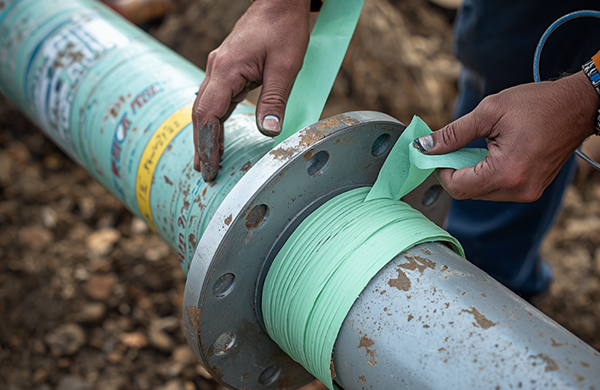
For reliable protection, the inner tape must be applied with controlled tension and the specified overlap. Wrinkles, air pockets, loose edges and insufficient overlap may create weak points in the coating system.
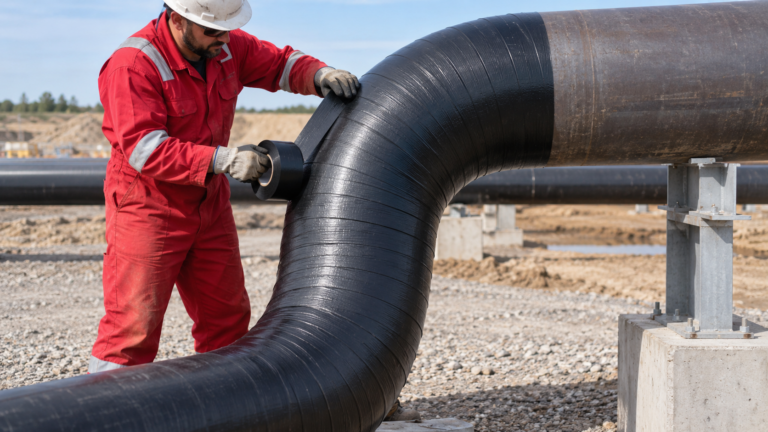
On bends and elbows, tape width, flexibility, tension and overlap become especially important because the inside and outside radii have different wrapping geometries.
Learn more about Jiayu’s cold-applied pipeline tape products.
The Function of Outer Wrap Tape
The outer wrap tape is installed over the inner corrosion protection tape.
Its primary purpose is mechanical protection rather than direct adhesion to the steel surface.
The outer tape helps:
Protect the inner layer during handling and installation
Resist damage during lowering-in and backfilling
Improve resistance to impact, indentation and soil stress
Hold the coating system securely in position
Protect the inner tape at overlaps and transition areas
Provide the specified external colour and surface finish
Compared with the inner wrap tape, the outer wrap typically has a thicker and stronger backing with a thinner adhesive layer. This construction reflects the different functions of the two materials.
Using inner tape as outer protection, or outer tape as the primary corrosion barrier, should not be assumed acceptable unless the manufacturer has specifically designed and qualified the product for both functions.
Why System Compatibility Matters
Primer, inner tape and outer tape should be selected as one coating system.
Products that appear similar may use different adhesive formulations, solvents, backing materials or application conditions. Mixing components from unrelated manufacturers without technical confirmation may introduce several risks:
Poor adhesion between layers
Primer and adhesive incompatibility
Edge lifting
Blistering or trapped solvent
Reduced mechanical stability
Uncertain temperature performance
Difficulty establishing warranty responsibility
Whenever possible, the three components should be manufactured, recommended or formally approved as a compatible system by the same manufacturer.
A compatibility statement should identify the actual product models and confirm their intended use together. It should not rely only on a general statement that all polyethylene tapes and primers are compatible.
Understanding Tape Construction and Thickness
The total thickness of a pipeline wrapping tape normally includes two parts:
Total tape thickness = backing thickness + adhesive thickness
These measurements have different technical meanings.
Backing thickness
The backing provides mechanical strength, dimensional stability and resistance to handling or soil-related damage.
A thicker backing does not automatically mean better corrosion protection, but it may provide stronger mechanical protection when correctly designed.
Adhesive thickness
The adhesive creates contact with the primed steel or the underlying tape layer. It helps accommodate minor surface irregularities and provides sealing and adhesion.
Total thickness
Total thickness is useful for product identification and coating build-up calculations, but it should not be evaluated alone. Two tapes with the same total thickness may have very different backing-to-adhesive ratios and therefore perform different functions.
Buyers should request all three values:
Total thickness
Backing thickness
Adhesive thickness
The tolerance and test method should also be stated.
Cold-Applied Tape for Pipeline Bends
Pipeline bends require particular attention because the tape must follow a changing geometry.
During wrapping:
The tape travels a longer distance along the outside radius.
Material may accumulate along the inside radius.
Incorrect tension may create wrinkles or lifting.
A tape that is too wide may be difficult to conform.
The effective overlap may vary if the application angle is not controlled.
For bends, the installer should use a tape width and wrapping method recommended for the bend radius and pipe diameter. Narrower tape may sometimes improve conformability, although it requires more wrapping passes.
The installation procedure should define:
Surface preparation
Primer application
Tape width
Minimum overlap
Wrapping direction
Application tension
Treatment of the inside and outside radii
Start and finish details
Final visual and holiday inspection
Where project conditions are demanding, a trial application on a representative bend is advisable before full installation.
Basic Installation Sequence
The following sequence provides a general overview. The approved manufacturer’s instructions and project specification must take priority.
- Inspect and prepare the steel
Remove oil, grease, moisture, loose rust, mill scale, weld spatter and other contaminants. Achieve the surface cleanliness and profile required by the project specification.
- Apply the compatible primer
Apply a thin and uniform coat at the manufacturer’s recommended coverage rate. Avoid missed areas, excessive accumulation and contamination.
- Apply the inner wrap tape
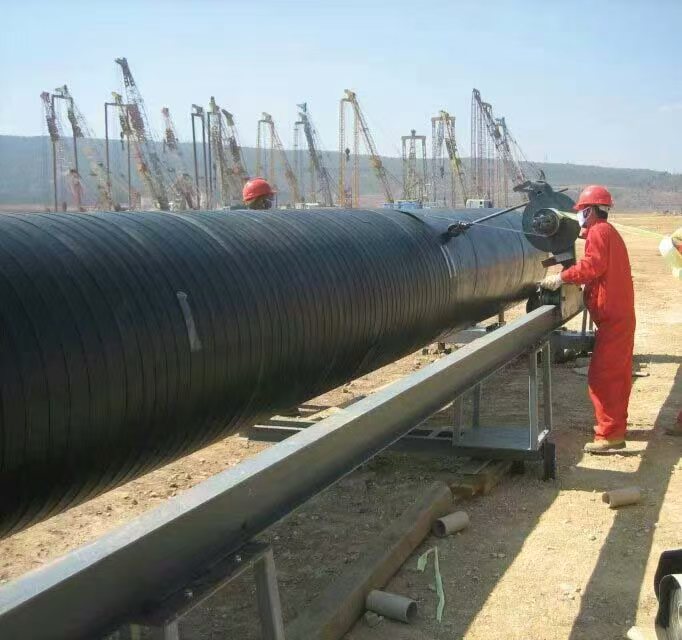
Wrap the tape with the adhesive side toward the primed steel. Maintain the specified tension and overlap while avoiding wrinkles and trapped air.
- Apply the outer wrap tape
Install the outer tape over the inner layer using the specified overlap. Ensure that the complete inner layer is protected.
- Inspect the completed system
Check for:
Wrinkles and folds
Loose edges
Inconsistent overlap
Trapped air
Physical damage
Unprotected areas
Coating discontinuities
Any defect should be repaired using an approved procedure before the pipeline is lowered into the trench or returned to service.
Information Buyers Should Provide
To recommend an appropriate cold-applied coating system, a manufacturer needs more than the required product weight.
The following information is particularly useful:
Pipe outside diameter
Pipe length or total coating area
Number and dimensions of bends
Bend angle and radius
Existing pipe coating
New construction or rehabilitation
Buried, submerged or above-ground service
Minimum application temperature
Maximum operating temperature
Soil and environmental conditions
Required tape thickness
Required tape width and roll length
Specified overlap
Surface preparation method
Applicable standards
Required inspection and testing
Packaging and delivery destination
Providing this information early can reduce quantity errors and prevent an unsuitable product configuration from being quoted.
Technical Documents to Request
A professional technical submission for a cold-applied tape system may include:
Technical Data Sheets for the tape and primer
Safety Data Sheets
Manufacturer’s compatibility statement
Product construction and dimensional information
Application instructions
Primer coverage and drying information
Packaging data
Certificate of Analysis or Certificate of Conformity
Quality management certificates
Applicable laboratory test reports
Country-of-origin declaration
Warranty terms
Recommended quantities based on actual packaging
Test reports should clearly identify the tested product, specimen construction, test method, conditioning requirements, test temperature and result.
Compliance with a complete coating-system standard should not be inferred from one individual tape test. Product-level test methods and system qualification standards serve different purposes.
Product Tests and Coating-System Qualification
Individual tape properties may be evaluated using methods such as ASTM D1000 or other applicable national and international test methods.
Complete pipeline coating systems may also be assessed against project requirements derived from standards such as EN 12068 or ISO 21809-3, where applicable.
However, these references are not interchangeable:
A product test evaluates a particular material property.
A system test evaluates the combined primer, tape layers and prepared substrate.
A project specification may introduce additional acceptance criteria.
Manufacturers and buyers should therefore agree on the required test programme before treating a product as fully compliant with a particular international standard.
How Jiayu Supports Cold-Applied Pipeline Coating Projects
Langfang Zhongyou Jiayu Anti-Corrosion Technology Co., Ltd. manufactures pipeline corrosion protection materials for new construction, maintenance and repair applications.
Jiayu can support project discussions involving:
Polyethylene anticorrosion adhesive tape
Inner and outer wrap configurations
Compatible pipeline primer
Tape width and roll-size selection
Pipeline bend applications
Packaging and quantity calculations
Technical documentation
Product samples and technical evaluation
Project-specific manufacturing requirements
Recommendations are made according to the information and technical requirements provided for each project.
For applications involving flanges, valves, pumps or highly irregular components, a viscoelastic corrosion protection system may be more appropriate than conventional polyethylene wrapping tape. For field joints, a heat-shrink sleeve may also be considered depending on the pipeline coating design.
Selecting the right system for each part of the pipeline is more effective than expecting one material to solve every corrosion protection problem.
Frequently Asked Questions
Can inner wrap tape and outer wrap tape use the same product model?
They may belong to the same product series, but their construction and functions can still be different. The backing thickness, adhesive thickness and intended layer should be clearly identified in the technical documentation.
Is primer always necessary?
Primer is normally an essential component of a conventional polyethylene tape coating system. Any proposal to omit it should be supported by the manufacturer’s written instructions and the project specification.
Can products from different manufacturers be combined?
They should not be combined without written technical confirmation and appropriate compatibility evaluation.
Is total tape thickness enough for product comparison?
No. Backing thickness, adhesive thickness, tolerances, test methods and intended function should also be compared.
Can cold-applied tape be used on pipeline bends?
Yes, provided the selected tape, width and installation method are suitable for the pipe diameter and bend geometry. A representative application trial may be useful.
Conclusion
A reliable cold-applied pipeline coating system depends on the coordinated performance of the primer, inner wrap tape and outer wrap tape.
The primer prepares the interface. The inner tape forms the principal corrosion barrier. The outer tape provides mechanical protection. Product construction, compatibility, surface preparation, overlap and installation quality all affect the completed system.
For buyers and engineers, the most important step is not simply finding a tape with the required nominal thickness. It is selecting and verifying a complete coating system suitable for the actual pipeline, operating environment and project specification.
Need help selecting a cold-applied tape system for straight pipes, bends, fittings or repair applications?
Contact Jiayu’s technical team with your pipe dimensions, service conditions, applicable standards and delivery destination. We can assist with product configuration, documentation, packaging and preliminary quantity calculations.