Welcome to our website!


Visco-Elastic Tape vs. Heat Shrink Sleeve: Which One to Choose?
Visco-Elastic Tape vs. Heat Shrink Sleeve: Which One to Choose?
Both visco-elastic tape and heat shrink sleeves are proven pipeline anti-corrosion solutions — but they serve different applications. Choosing the right one depends on pipe geometry, operating conditions, installation access, and project timeline. This article breaks down the key differences and provides a clear decision framework.
Overview: Two Different Technologies
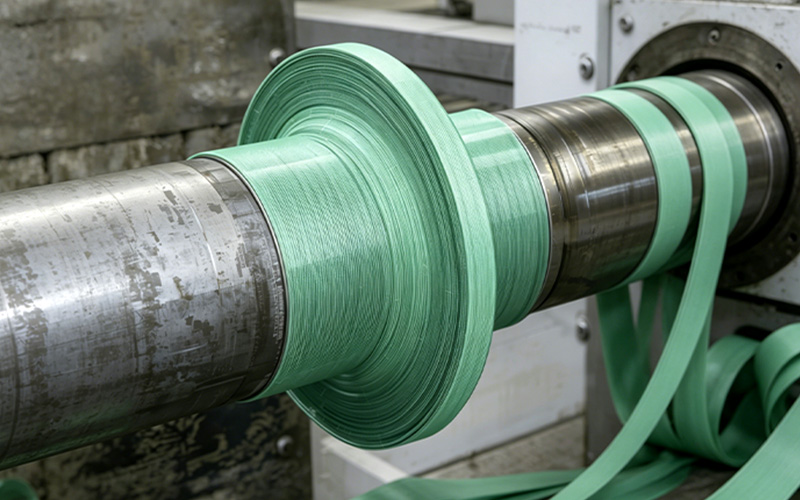
Visco-elastic tape and heat shrink sleeves are both widely used for pipeline corrosion protection, but they are based on fundamentally different technologies:
- Visco-Elastic Tape — A polyisobutylene (PIB)-based material that never cures, self-heals, and cold-flows into irregularities. It requires no heating and minimal surface preparation.
- Heat Shrink Sleeve — A radiation cross-linked polyethylene backing with a hot-melt adhesive layer. It requires heat (propane torch) to shrink tightly around the pipe and bond to the substrate.
Each technology has its own strengths, weaknesses, and ideal use cases.
Key Differences at a Glance
- Application Temperature — Cold (visco-elastic) vs. Hot (heat shrink).
- Surface Preparation — St2 hand cleaning (visco-elastic) vs. Sa2.5 blasting (heat shrink).
- Curing Time — None (visco-elastic) vs. Cooling time only (heat shrink).
- Self-Healing — Yes (visco-elastic) vs. No (heat shrink).
- Mechanical Strength — Moderate (visco-elastic) vs. Very high (heat shrink).
- Conformability — Excellent for irregular shapes vs. Best for straight pipes.
- Primer Required — No (visco-elastic) vs. Yes (epoxy primer for heat shrink).
- VOCs — Zero (visco-elastic) vs. Low (primer may contain VOCs).
Detailed Comparison
1. Surface Preparation Requirements
This is one of the most significant differences between the two technologies.
Visco-Elastic Tape — Only St2 hand tool cleaning is required. Loose rust, dirt, and oil are removed using wire brushes or scrapers. No sandblasting, no profilometer measurements, and no dust control. This saves time, reduces cost, and allows application in areas where blasting is impractical (e.g., operating plants, confined spaces, environmentally sensitive areas).
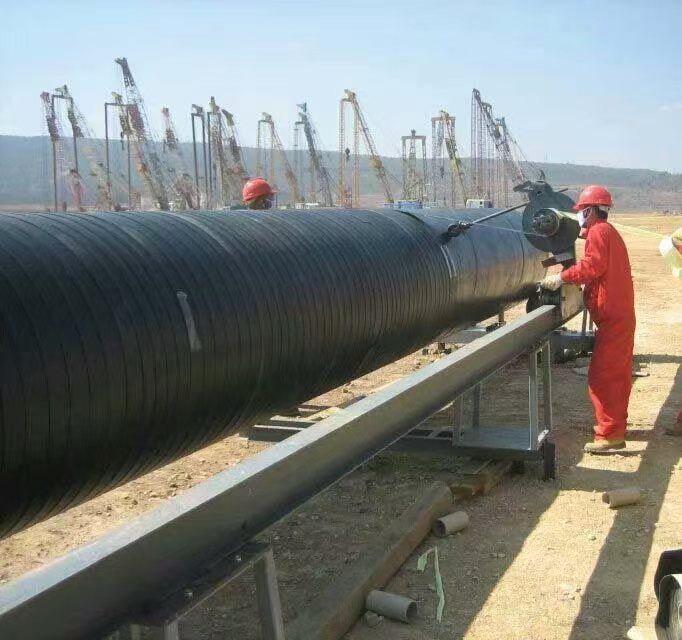
Heat Shrink Sleeve — Requires Sa2.5 near-white metal blasting. This demands specialized equipment, containment, and trained operators. Blasting generates dust, requires disposal, and may not be allowed in active plants or residential areas.
Verdict: Visco-elastic tape wins for projects with limited access, operating facilities, or tight budgets.
2. Application Process and Equipment
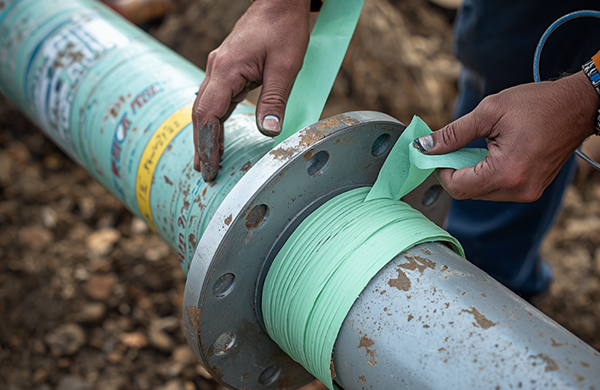
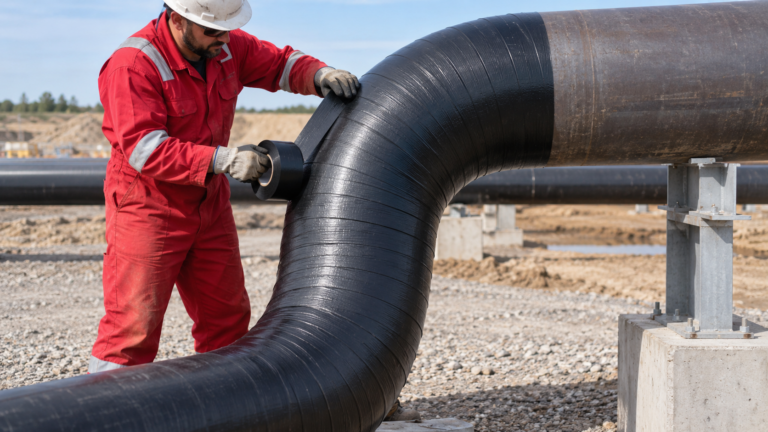
Visco-Elastic Tape — Cold application. Remove the release liner and wrap the tape around the component with 55% overlap. Press firmly. No heating, no primer, no waiting for curing. Installation can be completed by a single person with minimal training.
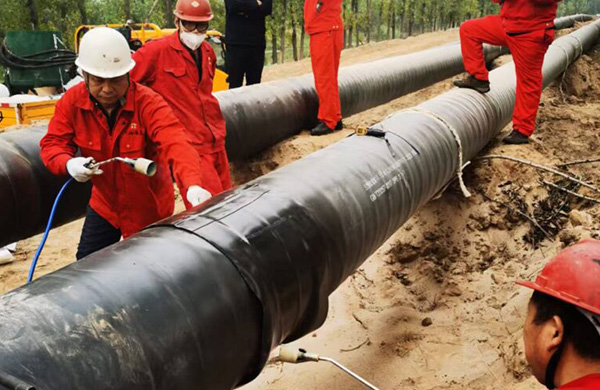
Heat Shrink Sleeve — Requires primer application, preheating, positioning the sleeve, and heating with a propane torch to shrink the sleeve and activate the adhesive. Even heating from the center outward is critical to avoid wrinkles or trapped air. Requires skilled operators and hot work permits.
Verdict: Visco-elastic tape is significantly easier and faster to install, especially in remote locations or on large-diameter pipes.
3. Conformability to Irregular Shapes
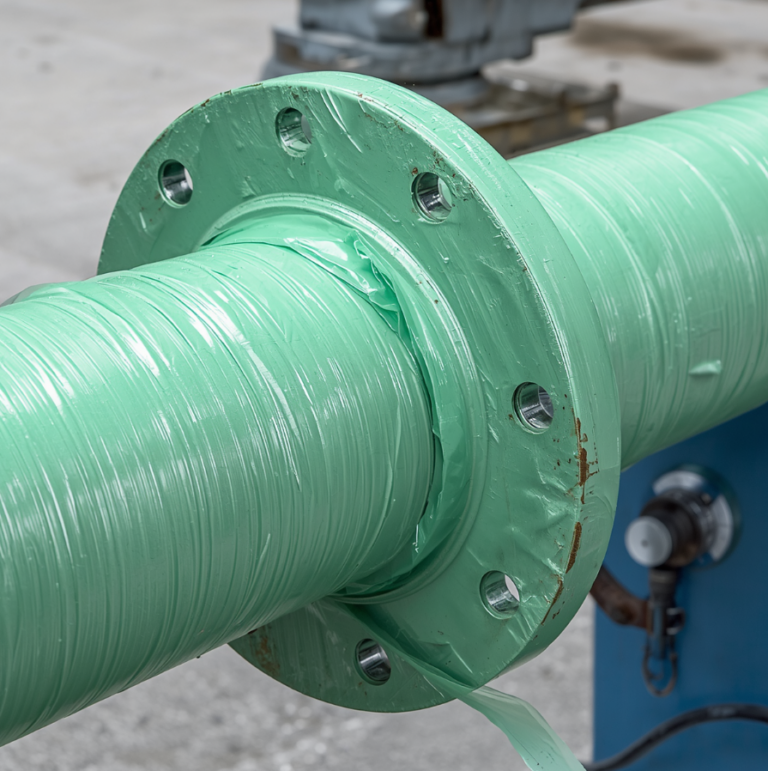
Visco-Elastic Tape — Exceptional. The tape cold-flows into cavities, bolt recesses, weld seams, and sharp angles. It can be applied directly over flanges, valves, pumps, and fittings without preforming or special techniques.
Heat Shrink Sleeve — Limited. Heat shrink sleeves are designed for straight pipes and uniform girth welds. They do not conform well to flanges, valves, or complex fittings. Pre-formed shapes are sometimes available but increase cost and lead time.
Verdict: Visco-elastic tape is the only practical choice for irregular shapes.
4. Mechanical Strength and Impact Resistance
Visco-Elastic Tape — Moderate. The tape is soft and conformable. For buried applications in rocky terrain or areas with high mechanical stress, an outer wrap (polyethylene or polypropylene tape) is recommended for additional mechanical protection.
Heat Shrink Sleeve — Very high. The radiation cross-linked polyethylene backing provides excellent impact resistance, abrasion resistance, and soil stress resistance. No outer wrap is needed for most buried applications.
Verdict: Heat shrink sleeves are superior for rocky terrain, directional drilling, or any application where high mechanical strength is required.
5. Self-Healing Capability
Visco-Elastic Tape — Yes. The tape self-heals minor scratches, punctures, and installation damage. This reduces long-term maintenance and provides a safety margin against coating defects.
Heat Shrink Sleeve — No. Damage to a heat shrink sleeve must be repaired manually using repair patches or additional sleeves.
Verdict: Visco-elastic tape offers unique long-term reliability through self-healing.
6. Compatibility with Cathodic Protection (CP)
Both technologies are CP-compatible, but with differences:
Visco-Elastic Tape — Excellent CP compatibility. The tape does not shield CP current and has outstanding cathodic disbondment resistance (tested to ISO 21809-3).
Heat Shrink Sleeve — Good CP compatibility. The epoxy primer provides a strong bond, but the polyethylene backing can shield CP current if disbondment occurs. Proper installation is critical.
Verdict: Both are CP-compatible, but visco-elastic tape offers greater forgiveness against cathodic disbondment.
7. Installation Cost and Timeline
Visco-Elastic Tape — Lower total installed cost. No blasting, no primer, no heating, no waiting. One person can complete multiple applications per day.
Heat Shrink Sleeve — Higher total installed cost. Requires blasting equipment, primer, propane torches, skilled labor, and hot work permits. Surface preparation and curing take significantly more time.
Verdict: Visco-elastic tape is more cost-effective, especially for small projects, repairs, and irregular components.
Decision Framework: Which One Should You Choose?
Use this simple decision guide based on your specific application:
- Choose Visco-Elastic Tape If:
- The component has irregular shape (flanges, valves, fittings, pumps).
- Surface preparation options are limited (no sandblasting allowed or available).
- Hot work permits are difficult to obtain.
- You need fast installation with minimal downtime.
- You are performing repair or rehabilitation on an existing pipeline.
- Low total installed cost is a priority.
- Choose Heat Shrink Sleeve If:
- The application is a new pipeline weld (girth weld) on straight pipe.
- High mechanical strength and impact resistance are required (rocky terrain, directional drilling).
- Blasting equipment and trained operators are readily available.
- The project specifications explicitly require heat shrink sleeves.
Can They Be Used Together?
Yes. In some applications, visco-elastic tape is used as a base layer for irregular components, and heat shrink sleeves are used for adjacent straight pipe welds. Additionally, visco-elastic tape can serve as an outer protective wrap for heat shrink sleeves in high-abrasion environments.
Standards and Compliance
Both technologies are recognized by international standards:
- Visco-Elastic Tape — ISO 21809-3, NACE SP0109, EN 12068.
- Heat Shrink Sleeve — ISO 21809-3, EN 12068, DIN 30672.
Jiayu manufactures both solutions, allowing us to recommend the right technology without bias.
Need Help Choosing the Right Solution?
Our technical team can review your project specifications and recommend the most cost-effective, reliable solution for your specific application.