Welcome to our website!


Why Do Flanges and Valves Corrode Faster Than Straight Pipes?
Why Do Flanges and Valves Corrode Faster Than Straight Pipes? | Jiayu Technical Insight
Flanges, valves, and other irregular fittings are the weakest links in any pipeline system — they corrode faster, fail earlier, and cost more to repair. This article explains the science behind why, and how modern visco-elastic technology solves the problem.
The Numbers Don‘t Lie
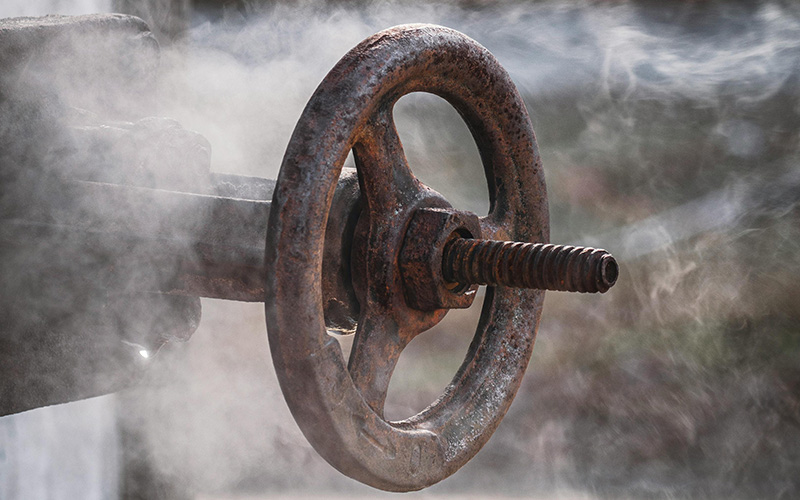
Industry studies show that over 80% of pipeline coating failures occur at flanges, valves, and fittings — not on straight pipe sections. Despite representing only a small fraction of total pipeline length, these irregular components account for the majority of corrosion-related maintenance costs.
Why? The answer lies in geometry, stress, and the limitations of traditional coating systems.
Reason 1: Complex Geometry Creates Corrosion Traps
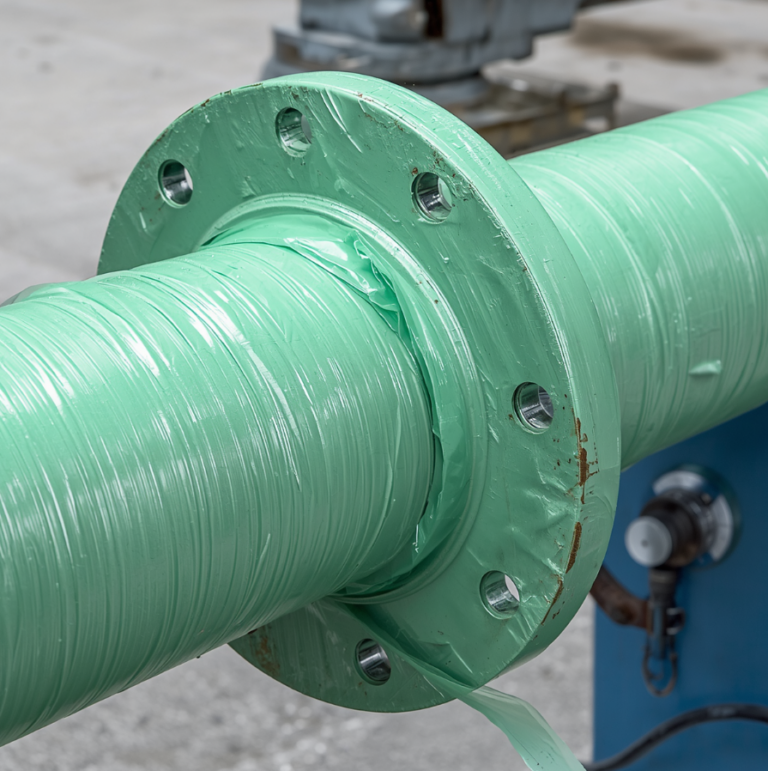
Flanges and valves have bolt recesses, sharp angles, raised faces, and crevices that trap moisture, oxygen, and electrolytes. Traditional coatings — whether liquid epoxies, tapes, or heat shrink sleeves — cannot conform perfectly to these shapes.
The result is bridging (where the coating spans across a cavity without contacting the metal) and voids (uncoated areas where corrosion starts). Once moisture penetrates these defects, corrosion proceeds rapidly in the trapped, oxygen-depleted environment — exactly the conditions that accelerate pitting and crevice corrosion.
Reason 2: Stress Concentration Accelerates Coating Failure
Flanges and valves are stress concentration points. Thermal cycling, pressure fluctuations, vibration, and bolt torque create mechanical stress that rigid coatings cannot absorb. Traditional coatings crack, disbond, or lose adhesion over time — exposing fresh metal to the environment.
Visco-elastic materials solve this problem because they never harden. They remain flexible and conformable, absorbing stress without cracking or losing adhesion.
Reason 3: Cathodic Protection Shielding
Cathodic protection (CP) is essential for buried pipelines, but it has limitations at irregular fittings. Thick, rigid coatings can shield CP current — preventing it from reaching the metal surface at coating holidays or disbonded areas. The result is accelerated corrosion exactly where protection is needed most.
Visco-elastic coatings are fully CP-compatible. They do not shield current and have excellent cathodic disbondment resistance, as confirmed by ISO 21809-3 testing.
Reason 4: Difficult Inspection and Maintenance
Flanges and valves are often located in valve pits, above-ground supports, or confined spaces — making inspection difficult and repair even harder. Traditional repair methods may require shutdown, hot work permits, or complex surface preparation.
This is why many operators delay repairs on flange corrosion until failure occurs — a costly and risky strategy.
The Solution: Visco-Elastic Technology
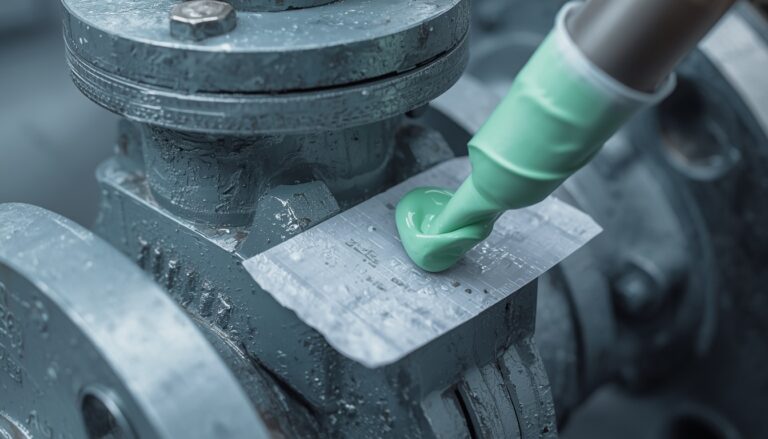
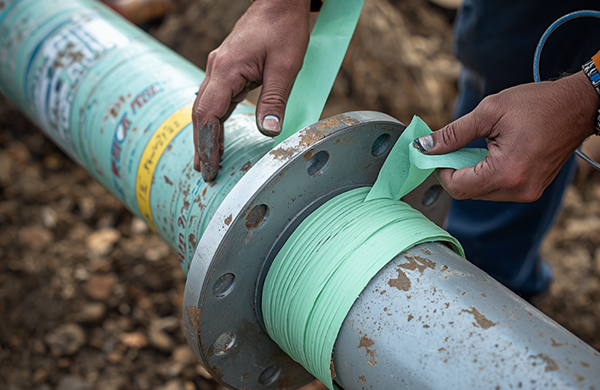
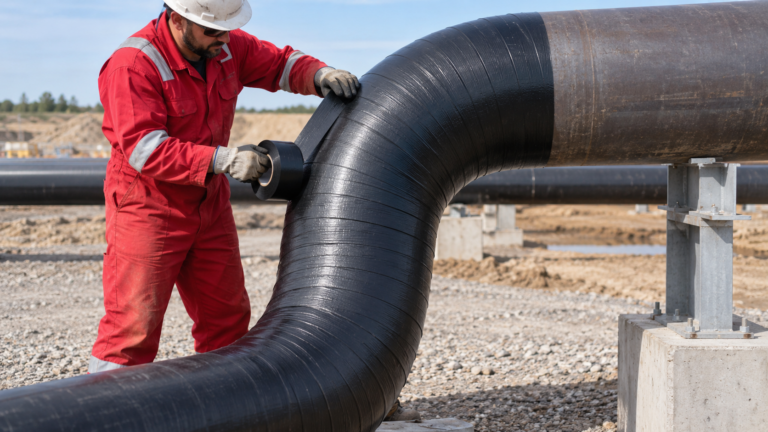
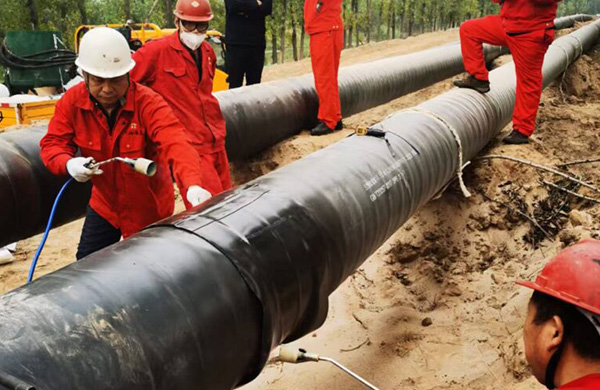
Visco-elastic tape and paste are specifically designed for irregular surfaces. Key advantages include:
- No bridging or voids — The paste fills all cavities; the tape cold-flows to achieve 100% contact.
- Stress-absorbing — Never hardens or cracks, even under thermal cycling and vibration.
- CP compatible — Excellent cathodic disbondment resistance.
- No sandblasting — Simple St2 hand cleaning is sufficient.
- Cold application — No heating, no hot work permits, no downtime.
Case Example: Flange Corrosion in a Gas Compressor Station
A natural gas compressor station experienced recurring flange corrosion despite regular recoating with liquid epoxy. Inspection revealed bridging and voids at bolt recesses. After switching to a visco-elastic system (paste + tape), no corrosion was found during the next scheduled inspection 3 years later.
Don‘t Wait for Failure
Flange and valve corrosion is predictable — but also preventable. By understanding why these components fail faster, you can specify the right coating system from the start.
📥 Need technical data or application guidance?
Download our Flange Corrosion Protection Guide (PDF) from the Download Center — includes case studies, material selection advice, and step-by-step installation instructions.
View Visco-Elastic Tape →
View Visco-Elastic Paste →
Published: June 5, 2026 | Category: Technical Insight