Welcome to our website!


Pipeline Corrosion Protection in the Middle East: Challenges for Flanges, Valves and Field Joints
The Middle East is one of the most important regions for oil and gas pipelines, water transmission systems, industrial plants, desalination facilities, and infrastructure projects. In these applications, pipeline corrosion protection is not only a material selection issue. It is closely related to safety, project reliability, maintenance cost, and long-term service performance.
Compared with many other regions, pipeline systems in the Middle East may face harsh service conditions, including high temperatures, strong sunlight, coastal humidity, saline environments, sand, dust, and demanding project specifications. These conditions make corrosion protection especially important for pipelines, field joints, flanges, valves, pumps, and other critical components.
For pipeline contractors, EPC companies, maintenance teams, and anticorrosion material distributors, selecting the right corrosion protection system is essential. Different pipeline areas require different materials, and a single product may not be suitable for every application.
Why Pipeline Corrosion Protection Matters in the Middle East
Pipeline projects in the Middle East are often connected with oil and gas production, water supply, industrial processing, petrochemical facilities, and infrastructure development. These systems are expected to operate safely and reliably for many years.
However, corrosion risks can increase when pipelines are exposed to challenging environmental and operating conditions.

Common regional challenges include:
| Challenge | Potential Impact on Pipeline Protection |
|---|---|
| High temperature | May affect material stability, adhesion, handling, and storage conditions |
| Strong UV exposure | Can accelerate aging of exposed materials if not properly protected |
| Coastal humidity and salt | May increase corrosion risk on exposed metal surfaces and fittings |
| Sand and dust | Can affect surface preparation and field installation quality |
| Buried pipeline environments | Require reliable external coating and mechanical protection |
| Industrial and petrochemical areas | May involve chemical exposure and stricter performance requirements |
| Maintenance shutdown limits | Require practical materials that can be installed efficiently on site |
Because of these conditions, pipeline corrosion protection in the Middle East should be planned according to the actual application area, operating environment, installation method, and project requirements.
Key Corrosion-Prone Areas in Pipeline Systems
Straight pipe sections are usually easier to protect because their surface is regular and predictable. However, many corrosion problems occur around areas with more complex geometry or field installation requirements.
Key areas that require special attention include:
- Field joints and girth welds
These areas are created during pipeline construction and often require field-applied coating systems. - Flanges
Flanges contain bolts, gasket areas, gaps, and edges where moisture and contaminants may accumulate. - Valves
Valves have complex shapes, stems, bolts, connection areas, and irregular surfaces. - Pumps and pump connections
Pump areas may include vibration, irregular shapes, connection interfaces, and maintenance access requirements. - Bends, elbows, tees, and fittings
These components involve geometry transitions that may be difficult to wrap evenly. - Coating repair areas
Damage during transportation, installation, handling, or backfilling may require local repair materials.
For more information about irregular components, read our related guide: [Visco-Elastic Corrosion Protection for Valves, Pumps and Irregular Metal Parts].
Challenges for Flanges, Valves and Irregular Components
Flanges, valves, pumps, and fittings are often more difficult to protect than straight pipes because they have complex shapes and many small areas where conventional wrapping materials may not achieve full contact.
Typical issues include:
- Bolt gaps and cavities
- Sharp edges and corners
- Uneven surfaces
- Small crevices around gasket areas
- Shape transitions between components
- Limited access during maintenance
- Difficult inspection after wrapping
If these areas are not properly protected, moisture and contaminants may enter small gaps and create corrosion risks over time.
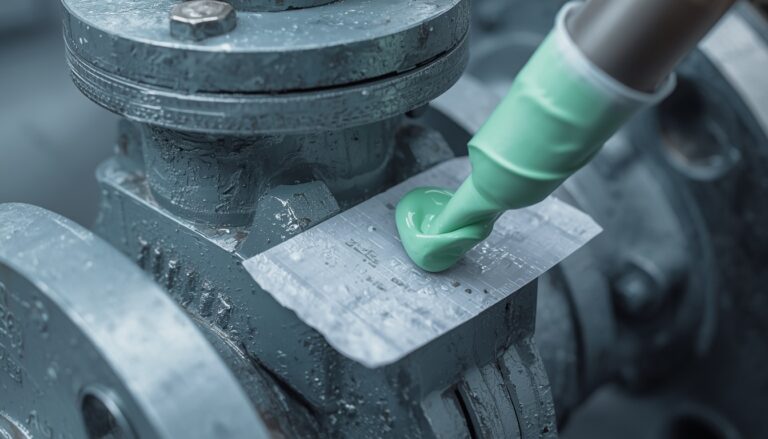
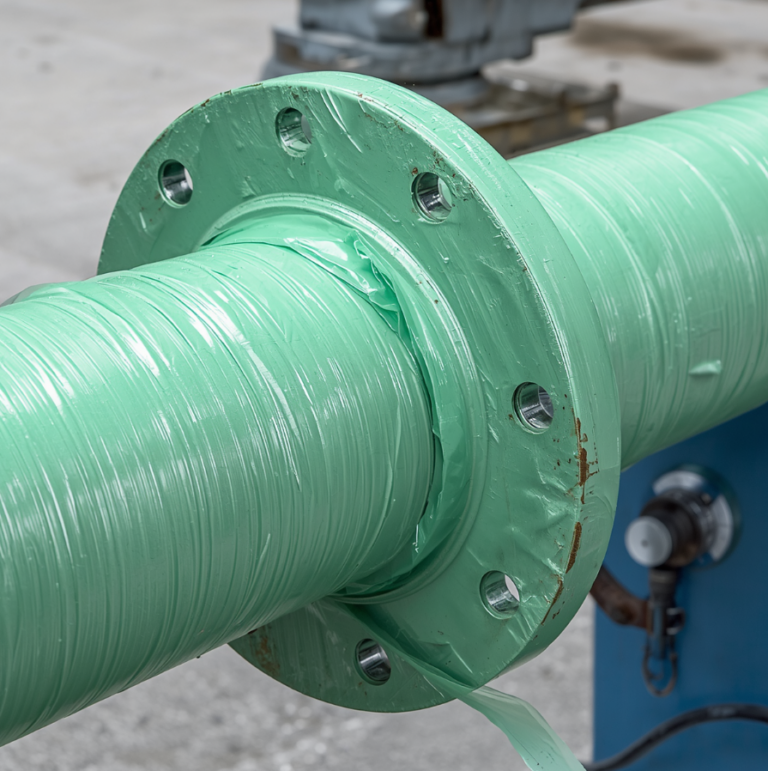
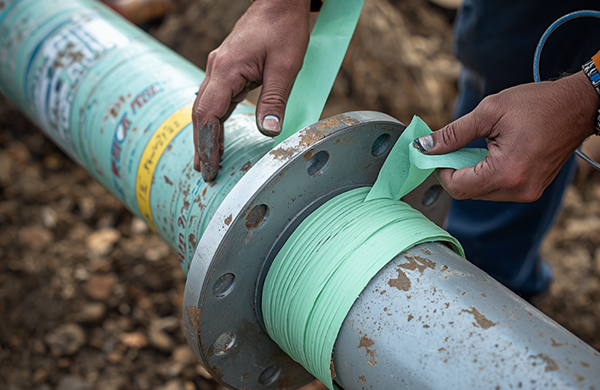
A viscoelastic corrosion protection system can be useful for these complex areas. Viscoelastic paste can help fill gaps, cavities, and uneven surfaces. Viscoelastic tape can then form a continuous corrosion protection layer over the component. In many applications, an outer protection tape or wrap is added for mechanical protection.
This system is especially suitable for components where conventional wrapping methods may be difficult to apply completely.
To understand how the material works, you may also read: [What is Visco-Elastic Tape and How Does It Work?]
Challenges for Field Joints and Girth Welds
Field joints are another critical area in pipeline projects. After pipeline sections are welded together, the joint area needs to be protected with a suitable coating system. Poor field joint protection may affect the long-term reliability of the pipeline coating system.
Common field joint challenges include:
| Field Joint Challenge | Why It Matters |
|---|---|
| Surface preparation quality | Poor cleaning may reduce coating performance |
| Heating control | Improper heating may affect heat shrink sleeve installation |
| Primer application | Incorrect mixing or coating thickness may affect bonding |
| Installation consistency | Field conditions may vary between crews and locations |
| Edge sealing | Poor sealing may allow moisture entry |
| Inspection | Defects should be identified before backfilling or operation |
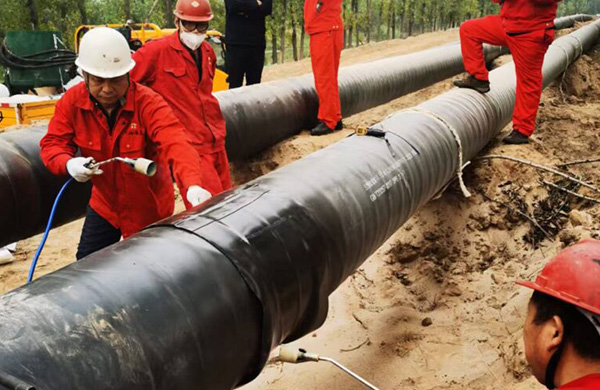
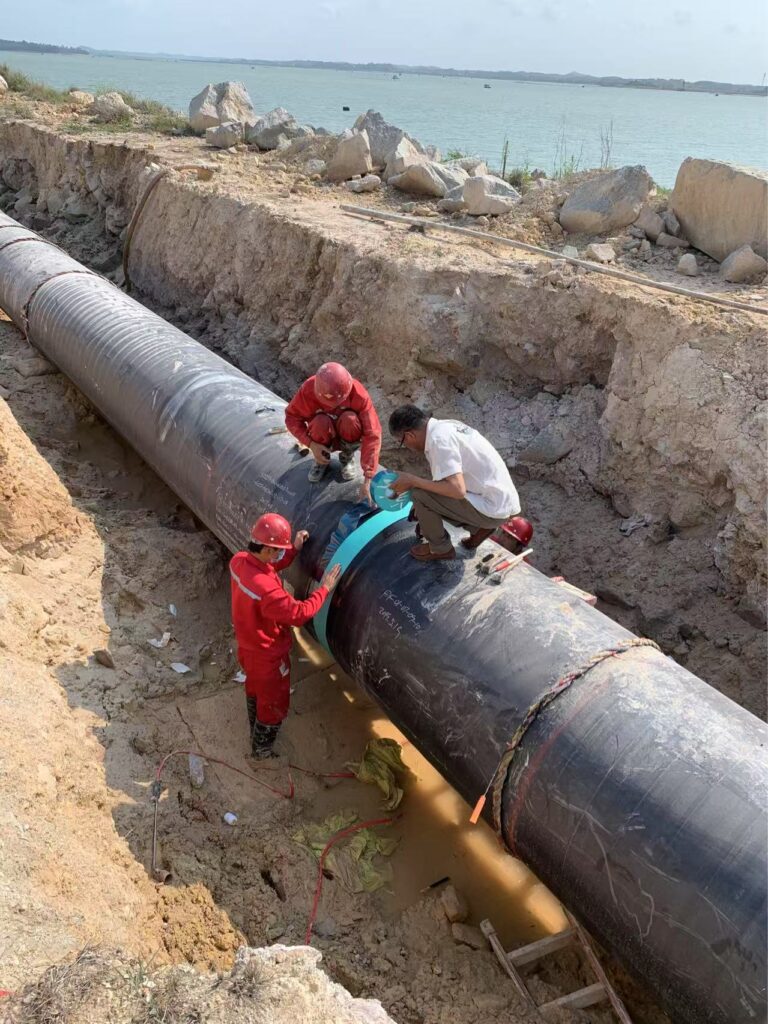
Heat shrink sleeves and heat shrink bands are commonly used for pipeline field joints because they are designed to provide protection around girth weld areas and field-applied joint sections.
For installation details, see our guide: [How to Install Heat Shrink Sleeve on Pipeline Field Joints – Step by Step].
Pipeline Coating Repair and Maintenance Needs
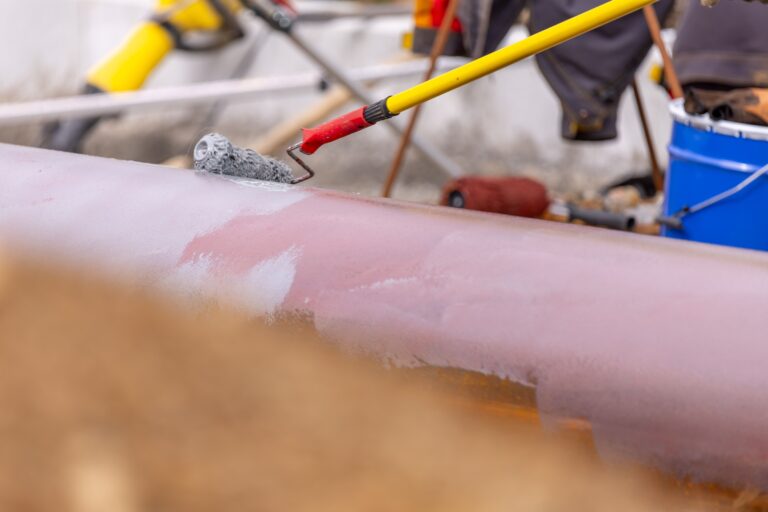
Pipeline coating damage may occur during transportation, handling, welding, lowering-in, backfilling, or later maintenance activities. In Middle East projects, where pipelines may be exposed to harsh outdoor conditions or demanding project schedules, quick and reliable repair materials are important.
Typical coating repair materials may include:
- Repair patches
- Repair sticks
- Heat shrink repair materials
- Cold-applied repair tapes
- Compatible primers or surface preparation materials
The right repair method depends on the damage type, coating system, operating environment, and project specification.
For example, small coating defects may require repair stick filling and patch coverage, while larger damaged areas may require a more complete repair system. Contractors should always evaluate the damage depth, exposed metal area, coating compatibility, and inspection requirements before selecting a repair solution.
Cold-Applied Tape, Heat Shrink Sleeve and Viscoelastic System: How to Choose
Different pipeline areas may require different corrosion protection materials. The right choice depends on the component shape, installation conditions, and project requirements.
| Application Area | Common Material Option | Selection Logic |
|---|---|---|
| Straight pipe sections | Cold-applied tape or pipeline wrapping tape | Suitable for regular surfaces and continuous wrapping |
| Field joints and girth welds | Heat shrink sleeve or heat shrink band | Suitable for welded joint protection and field-applied coating |
| Flanges | Viscoelastic paste + tape + outer wrap | Suitable for bolt gaps, gasket edges, and irregular surfaces |
| Valves | Viscoelastic corrosion protection system | Suitable for complex geometry and difficult wrapping areas |
| Pumps and connections | Viscoelastic paste and tape system | Suitable for irregular interfaces and maintenance areas |
| Local coating damage | Repair patch, repair stick, or repair tape | Suitable for coating repair and maintenance |
| Bends, elbows, fittings | Cold-applied tape or viscoelastic system depending on shape | Selection depends on complexity and exposure conditions |
In many pipeline projects, these materials should not be treated as competitors. They can work together as part of an integrated corrosion protection system.
For example:
- Heat shrink sleeves can be used for field joints.
- Cold-applied tapes can be used for regular pipe sections and certain repair areas.
- Viscoelastic paste and tape can be used for flanges, valves, pumps, and irregular components.
- Repair patches and sticks can be used for local coating damage.
This system-based thinking is especially important for Middle East projects, where different pipeline areas may face different technical challenges.
Material Selection Considerations for Middle East Projects
When selecting pipeline corrosion protection materials for the Middle East, buyers and contractors should consider more than product name and price.
Important questions include:
- What is the application area?
Straight pipe, field joint, flange, valve, pump, fitting, or repair zone? - Is the surface regular or irregular?
Complex surfaces may require paste and tape systems rather than standard wrapping alone. - Will the material be buried or exposed?
Buried pipelines and exposed components may have different mechanical and UV protection requirements. - What are the temperature and storage conditions?
High-temperature environments may affect material handling, storage, and installation. - Is surface preparation practical on site?
Field conditions may influence material performance and installation quality. - Are project standards or testing documents required?
EPC companies and oil and gas projects may require technical datasheets, test reports, MSDS/SDS, installation guides, and inspection procedures. - Is local installation support needed?
Complex components such as valves and flanges may require clear installation instructions or technical communication.
A reliable supplier should not only provide products, but also help buyers match materials to application areas and project conditions.
Supplier Checklist for Pipeline Corrosion Protection Projects
Before choosing a pipeline corrosion protection supplier, buyers may consider the following checklist:
| Supplier Capability | Why It Matters |
|---|---|
| Product range | Different pipeline areas require different materials |
| Technical datasheets | Engineers need product data for evaluation |
| Installation guides | Contractors need clear field application instructions |
| Testing capability | Supports technical confidence and quality control |
| Customization support | Projects may require special sizes, packaging, or specifications |
| Experience with overseas projects | Helps support export, documentation, and communication |
| Communication ability | Important for EPC companies, contractors, and distributors |
| Sample support | Allows buyers to test material suitability before bulk purchase |
For Middle East customers, technical communication is often as important as product availability. Buyers may need help comparing materials, confirming application methods, and preparing documents for project approval.
How Jiayu Corrosion Supports Pipeline Protection Applications
Langfang Zhongyou Jiayu Anti-Corrosion Technology Co., Ltd. manufactures pipeline corrosion protection materials for external pipeline coating, field-joint protection, pipeline repair, maintenance, and complex component protection.
Our product range includes:
- Butyl rubber adhesive anticorrosion tapes
- Polyethylene heat-shrink sleeves and bands
- Viscoelastic anticorrosion tapes and pastes
- Solvent-free epoxy primers
- Related pipeline coating repair materials
For Middle East pipeline and infrastructure projects, we can support product matching, specification discussion, technical communication, packaging discussions, and integrated corrosion protection solutions according to project requirements.
Our viscoelastic paste and tape system is especially suitable for complex areas such as flanges, valves, pumps, bolts, and irregular metal parts, where conventional wrapping materials may be difficult to apply completely.
Related Technical Guides
For more information about pipeline corrosion protection and material selection, you may also read:
- [What is Visco-Elastic Tape and How Does It Work?]
- [Visco-Elastic Tape vs. Heat Shrink Sleeve: Which One to Choose?]
- [How to Apply Visco-Elastic Tape on Flanges – A Step-by-Step Guide]
- [Why Do Flanges and Valves Corrode Faster Than Straight Pipes?]
- [How to Install Heat Shrink Sleeve on Pipeline Field Joints – Step by Step]
- [Visco-Elastic Corrosion Protection for Valves, Pumps and Irregular Metal Parts]
Conclusion
Pipeline corrosion protection in the Middle East requires a practical and application-based material selection strategy. Straight pipe sections, field joints, flanges, valves, pumps, fittings, and repair areas all have different protection challenges.
For field joints, heat shrink sleeves and compatible coating systems may be suitable. For straight or regular pipe sections, cold-applied tapes may be used. For flanges, valves, pumps, and irregular metal parts, viscoelastic paste and tape systems can help fill gaps and form continuous protection around complex surfaces.
For pipeline contractors, EPC companies, maintenance teams, and anticorrosion material distributors, the key is not simply choosing one product. The more important step is selecting the right protection system for each application area.
Need corrosion protection materials for pipeline projects, field joints, flanges, valves, pumps, or repair applications in the Middle East?
To learn more about our pipeline corrosion protection materials and technical solutions:
Website: www.jiayucorrosion.com
WhatsApp: +86 15132606953
Our technical team can review your project conditions and recommend the most cost-effective, reliable tape for your specific application.