Welcome to our website!


Surface Preparation for Cold-Applied Pipeline Coating Systems: Why It Matters
Surface Preparation for Cold-Applied Pipeline Coating Systems: Why It Matters
Pipeline corrosion protection does not begin with the coating material itself. It begins with the condition of the steel surface.
Even a well-designed anti-corrosion tape, viscoelastic system, heat-shrinkable sleeve, or primer can perform poorly if the substrate is contaminated, wet, loosely rusted, or improperly prepared. For field joints, coating repairs, valves, flanges, elbows, and other pipeline components, proper surface preparation is therefore one of the most important steps before installation.
This article explains why surface preparation matters and what pipeline owners, EPC contractors, maintenance teams, and coating applicators should consider before applying a pipeline corrosion protection system.
Why Surface Preparation Is Critical
A corrosion protection system must maintain intimate contact with the substrate in order to provide effective long-term protection.
Oil, grease, dust, moisture, mill scale, loose rust, old coating residues, and other contaminants can interfere with adhesion and create potential pathways for moisture or electrolytes to reach the steel surface.
Poor surface preparation may contribute to problems such as:
- Reduced adhesion
- Trapped moisture
- Air pockets or voids
- Premature lifting at coating edges
- Localized corrosion beneath the coating
- Poor sealing around welds and irregular components
For this reason, surface preparation should be treated as part of the complete corrosion protection system rather than as a separate preliminary activity.
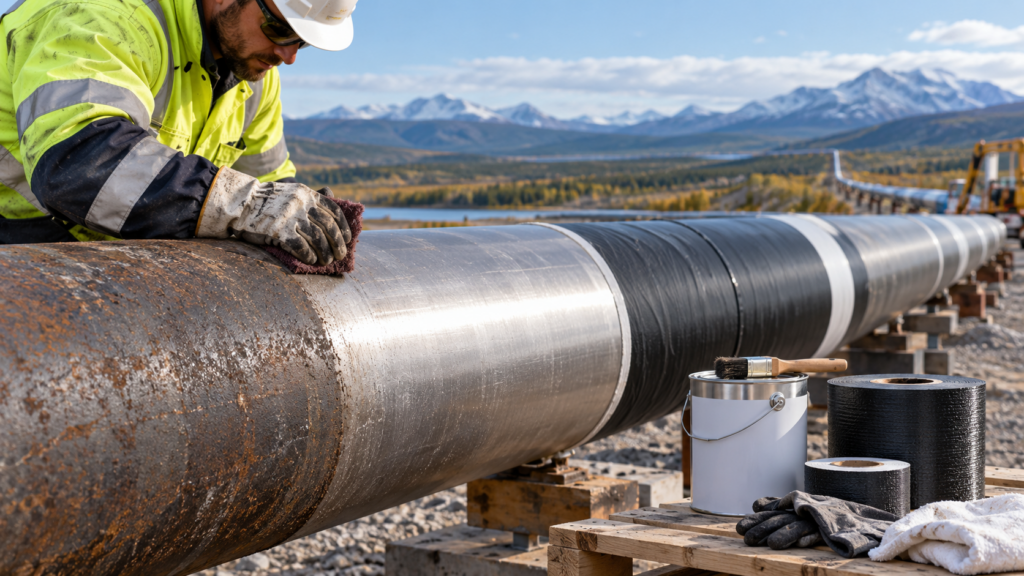
Step 1: Remove Oil, Grease and Surface Contamination
Before mechanical cleaning begins, the substrate should be free from oil, grease, mud, salts, moisture, and other visible contamination.
If oil or grease remains on the surface, subsequent mechanical cleaning may spread the contamination instead of removing it.
The cleaning method should be selected according to the project specification, coating system, and site conditions. Depending on the application, this may include approved solvents, detergents, clean cloths, or other suitable cleaning methods.
The steel surface should be clean and in a condition suitable for application before the corrosion protection material is installed.
Step 2: Remove Loose Rust, Scale and Deteriorated Coating
Loose rust, mill scale, deteriorated coating, weld spatter, and poorly bonded residues should be removed before coating application.
Depending on the project and coating system, preparation may involve hand-tool cleaning, power-tool cleaning, wire brushing, grinding, or abrasive blasting.
Some projects specify surface preparation grades in accordance with ISO 8501-1, while others use national standards or project-specific requirements.
The required preparation level should always be confirmed from the approved coating procedure and project specification.
Step 3: Pay Special Attention to Welds and Irregular Geometry
Straight pipe surfaces are generally easier to prepare and coat than irregular pipeline components.
More challenging areas include weld seams, flanges, valves, tees, reducers, elbows, bolts, casing ends, and transitions between different coating systems.
Sharp edges, cavities, bolt recesses, weld undercuts, and abrupt changes in geometry can prevent the coating material from maintaining continuous contact with the substrate.
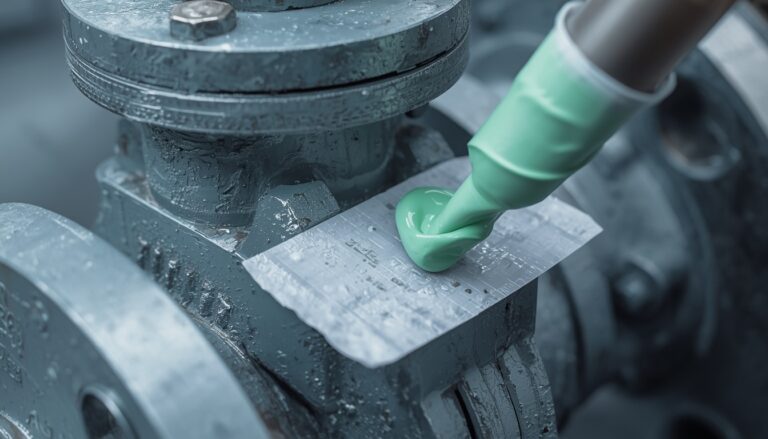
In such areas, compatible profiling or filling materials may be required before the main corrosion protection layer is applied.
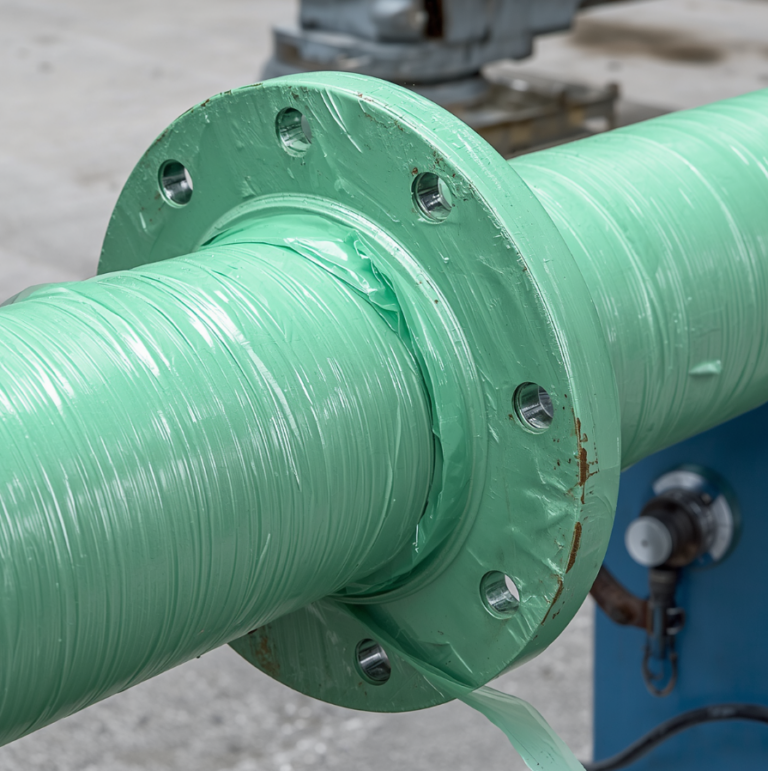
For example, Jiayu’s visco-elastic anti-corrosion tape system is designed to conform to irregular components such as flanges and valves, and can be used together with compatible viscoelastic paste to fill cavities and difficult transitions.
Step 4: Control Moisture and Surface Condition
Moisture is one of the most important factors to control before coating installation.
Before application, the contractor should confirm that the substrate condition is suitable for the selected coating system.
Important factors may include visible moisture, condensation, steel surface temperature, ambient temperature, humidity, dew point, rainfall, and standing water.
The allowable conditions vary between coating systems. Some cold-applied systems can tolerate less demanding surface preparation than certain liquid coating or heat-applied systems, but this does not mean that surface preparation can be ignored.
The manufacturer’s application procedure and project specification should always take priority.
Step 5: Check Compatibility with Existing Pipeline Coatings
Pipeline repair and rehabilitation often involve applying a new corrosion protection material next to an existing factory coating.
Common existing coating systems include:
- 2LPE and 3LPE
- 2LPP and 3LPP
- Fusion-bonded epoxy (FBE)
- Liquid epoxy coatings
- Coal-tar-based coatings
- Existing tape coating systems
The repair material must be compatible not only with exposed steel but also with the adjacent original coating.
The overlap zone between the new repair material and the existing coating deserves particular attention. The existing coating should be sound, clean, and prepared according to the selected repair system.
For field-joint and coating-repair applications, Jiayu also supplies radiation cross-linked polyethylene heat-shrinkable tape for compatible pipeline coating systems.
Different Coating Systems Require Different Surface Preparation
There is no single preparation method that is suitable for every corrosion protection system.
Polyethylene Cold-Applied Tape Systems
A conventional polyethylene tape system normally consists of three compatible components:
Primer + Inner Anti-Corrosion Tape + Mechanical Outer Wrap
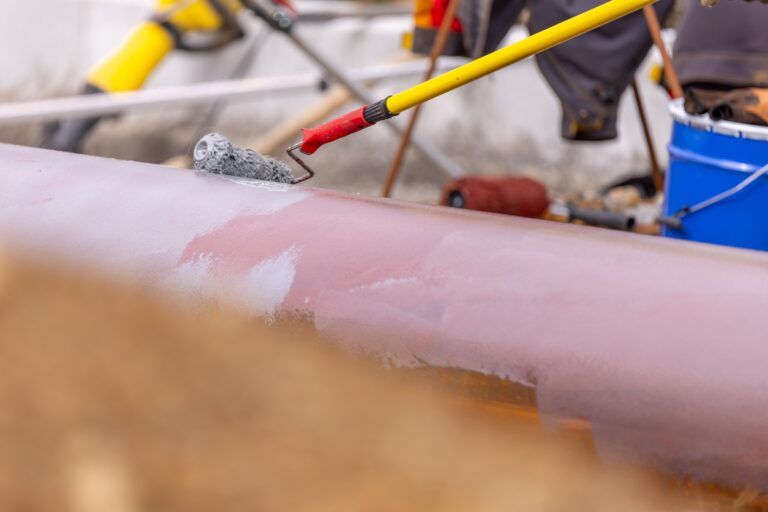
The primer promotes adhesion between the prepared steel and the adhesive layer of the inner tape. The inner tape provides the main corrosion barrier, while the outer tape protects the system against mechanical damage.
Surface cleanliness, primer condition, tape tension, and overlap therefore work together as part of the complete installation process.
For a more detailed explanation of this system, see our guide: Inner Wrap Tape, Outer Wrap Tape and Primer: How a Complete Cold-Applied Pipeline Coating System Works.
Viscoelastic Corrosion Protection Systems
Viscoelastic materials remain permanently non-curing and are designed to maintain intimate contact with the substrate through conformability and cold-flow behavior.
They are especially useful for irregular components such as flanges, valves, pumps, tees, elbows, and complex coating transitions.
However, loose contamination, grease, unstable rust, and standing water should still be properly addressed before application.
Learn more about Jiayu’s JY-201 visco-elastic anti-corrosion tape.
Heat-Shrinkable Repair Systems
Heat-shrinkable sleeves and wraparound materials generally require more controlled surface preparation because final performance depends on the interaction between the prepared steel, primer or adhesive, heat-shrink material, and adjacent factory coating.
Surface preparation, preheating, overlap, heating procedure, and installation temperature must therefore be controlled according to the manufacturer’s procedure and project specification.
For coating damage repair rather than complete field-joint protection, a dedicated radiation cross-linked polyethylene repair patch may also be suitable depending on the type and extent of the coating defect.
Pipeline Bends and Elbows Need Extra Attention
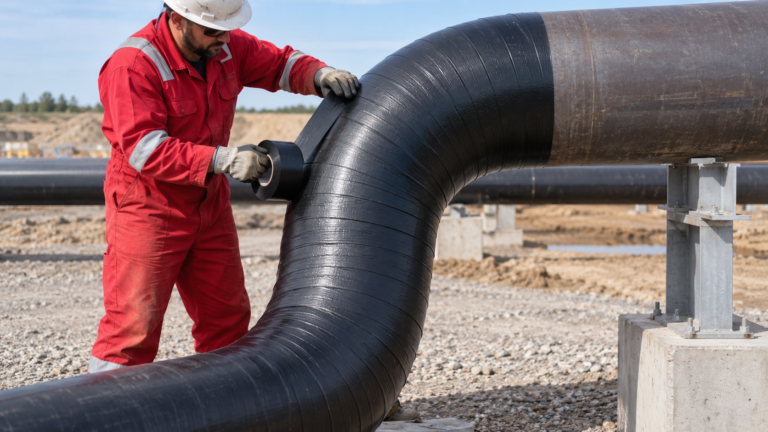
Surface preparation becomes even more important on bends and elbows because installation geometry is more difficult than on straight pipe.
Differences between the inside and outside radii can affect tape tension, overlap, conformability, and the risk of wrinkles or trapped air.
Before large-scale installation, representative application trials may be useful when pipe diameter, bend radius, tape width, or project conditions are demanding.
For further guidance, read: Cold-Applied Pipeline Wrapping Tape for Bends and Elbows: Selection and Application Guide.
Surface Preparation Should Be Defined Before the Project Starts
Before selecting a pipeline coating or repair material, the manufacturer and contractor should understand the actual application conditions.
Important information includes the pipeline outside diameter, existing coating type, operating temperature, environmental conditions, required surface preparation grade, required surface profile, primer requirements, application temperature, overlap requirements, inspection criteria, and applicable project standards.
Providing this information early helps reduce product-selection errors and allows the manufacturer to recommend a suitable corrosion protection system.
Surface Preparation and International Standards
International pipeline projects may specify standards such as ISO 8501-1 for surface cleanliness, while coating performance may be evaluated according to standards such as ISO 21809-3, EN 12068, or project-specific specifications.
It is important to distinguish between the surface preparation standard and the performance standard for the coating system.
A coating material should not automatically be considered compliant with a complete international standard simply because one or more properties have been tested using an international method.
For this reason, buyers should review the complete test scope, sample construction, laboratory information, and project acceptance criteria before confirming compliance.
Final Thoughts
Surface preparation is one of the most important factors affecting the performance of a pipeline corrosion protection system.
The objective is not simply to make the pipe look clean. The purpose is to create a stable and properly prepared substrate that allows the selected coating system to maintain continuous contact and provide reliable corrosion protection.
For pipeline owners, EPC contractors, and maintenance teams, the most reliable results come from treating surface preparation, material selection, installation, and inspection as one complete system.
Langfang Zhongyou Jiayu Anti-Corrosion Technology Co., Ltd. supplies a range of pipeline corrosion protection materials, including cold-applied polyethylene tape systems, viscoelastic corrosion protection materials, heat-shrinkable products, repair materials, and compatible primers.
If you are evaluating materials for a pipeline field joint, coating repair, bend, elbow, flange, valve, or rehabilitation project, please provide your pipe dimensions, existing coating type, operating temperature, applicable standards, and installation conditions. Our technical and sales team can assist with preliminary product selection and documentation review.